Posts

Symbolism depicting the Younger Dryas impact at Kortik Tepe (hundreds of years before Enclosure D at Gobekli Tepe)?

Image
Alistair Coombs brought these images of symbols at Kortik Tepe to my attention recently. I have seen them before, but think they deserve to be highlighted now. Kortik Tepe's symbolism is discussed by Benz and Bauer in 2015 in the Journal of Ritual Studies. They attribute the symbolism to shamanism, much like the archaeologists working at Gobekli Tepe who attribute its symbolism to shamanism as well. Kortik is not that far from Gobekli, being part of a group of settlements near the other great Mesopotamian river, the Tigris. Gobekli is much closer to the Euphrates. The Kortik settlement is thought to have begun during the early part of the Younger Dryas and therefore is thought to predate Gobekli. But since we don't know Gobekli's true age, this is conjecture. Since it is obvious that Gobekli's shamanistic symbolism is strongly linked to astronomy and the Younger Dryas impact, we can expect the same of Kortik, and this is indeed borne out by the evidence. Note that there...

New paper published: Rejection of Holliday et al.'s Alleged Refutation of the Younger Dryas Impact Hypothesis

Another paper that rejects Holliday et al.'s (2023; HEA) Gish gallop has been accepted for publication in Earth Science Reviews, the journal that published HEA. Because of the word limit imposed by ESR on our rebuttal, we could publish only a summary paper that points out only the major errors in each section of Holliday et al. (2023). We sought other journals but the editors refused our request to publish our response in their journals, stating that ESR is the appropriate vehicle. Given this limitation, we had little option but to publish a summary in ESR with the extended details in Airbursts and Cratering Impacts (see the previous blog post ). So the longer paper in ACI should be seen as an extension of the summary paper in ESR. Note that, originally, ESR limited our response to 3000 words, which is clearly inadequate when rebutting an article of over 96,000 words! After appeal, ESR relented by allowing a word length limit of 6000 words. Ultimately, we were allowed to publish a ...

New paper published: Rebuttal of Holliday et al.’s comprehensive Gish gallop of the Younger Dryas impact hypothesis

Image
Our rebuttal to Holliday et al. (2023) is finally published in Airbursts and Cratering Impacts. Rebuttal of Holliday et al.’s Comprehensive Gish Gallop of the Younger Dryas Impact Hypothesis Martin B. Sweatman, James L. Powell, Allen West In an article comprising some 96,000 words, Holliday et al. (2023)  (HEA) claim to have “comprehensively refuted” the Younger Dryas impact hypothesis (YDIH), even though it has been corroborated by scores of articles in dozens of peer-reviewed journals based on the discovery of some combination of synchronous nanodiamonds, exotic microspherules and platinum enrichment at more than 50 Younger Dryas boundary sites on five continents. No hypothesis or theory is immune from criticism, but to “comprehensively refute” one so well established should require dispositive falsifying evidence. However, HEA provide no new evidence of their own and many of their arguments are based on faulty reasoning. Their remaining differences of opinion do not lend themsel...

New Conference Paper: Meteor Strikes Recorded in Prehistoric Art: From Göbekli Tepe to Lascaux

Image
The following paper will be presented at the conference " Fourth International Symposium on Megalithic Monuments and Cult Practices", October 10-14, South West University "Neofit Rilski", Bulgaria. METEOR STRIKES RECORDED IN PREHISTORIC ART: FROM GÖBEKLI TEPE TO LASCAUX   Martin B. Sweatman   Abstract: Earth has endured an episode of coherent catastrophism over the last 20-30 thousand years or so. This means strikes by comet fragments were much more common and violent during this period than the long-term average. Over most of this time, humans were unable to record these comet strikes in writing. But, it seems they were still able to record what happened to them, and when, with a form of proto-writing that involved constellations and precession of the equinoxes. Here, I describe evidence for two cosmic impacts recorded on stone; Pillar 43 at Göbekli Tepe and the Lascaux Shaft Scene. Each is an artistic masterpiece designed to endure. The impact described at...

Jim Powell labels Holliday, Boslough and co. "Pseudoskeptics"

Image
Jim Powell has just published a paper in the Journal of Academic Ethics called "Data vs Derision: the ethics of scientific publishing. The Younger Dryas impact hypothesis as a case study". In it, he labels Holliday et al. and others as "pseudoskeptics", with good reason. He lists the criteria for identifying pseudoskeptics and then shows that Holliday et al. and others fit this description. Importantly, this paper has been peer reviewed by experts in academic ethics. Data vs. Derision: The Ethics of Language in Scientific Publication. The Younger Dryas Impact Hypothesis as a Case Study | Journal of Academic Ethics (springer.com)

Lunisolar calendar paper accepted for publication

Image
At last, my lunisolar calendar paper has been accepted for publication in Time and Mind. I must once again thank Dr John Gordon for emailing me the initial insight about the lunar cycle that appears on Pillar 43 (the top row of V-symbols in the picture above). The rest of the paper followed from this. (Dr John Gordon is a psychiatrist at the Turning Winds institute in Montana, USA). The article is published open access and available here . I'm making selected images available below for free use, along with links to other images. Pillar 43 at Gobekli Tepe (courtesy of Alistair Coombs) Pillar 43 (right and middle) and  a view from Stellarium (left). Symbols on Pillar 18 compared with the Nebra sky disk (from wikipedia ). Sketch of a likely lunar calendar (from Alexander Marshak, 1972. The Roots of Civilization: the Cognitive Beginning of Man’s First Art, Symbol and Notation. New York: McGraw-Hill). Images of the Master/Mistress of animals can be found here  and here . Sketch of ...

Holliday et al.'s Gish gallop: the YD black mats

Image
We have already  established that Holliday et al. is a Gish gallop, i.e. a (very) long series of weak or fallacious arguments. Now let's look at another of their  less interesting chapters that are quite superfluous, but it nevertheless illustrates the kind of rhetorical tactics that Holliday et. al are prepared to use. In this case, Section 6 concerns interpretation of the Younger Dryas (YD) black mat. It's a superfluous section because any misunderstanding of the YD black mat by YDIH proponents is irrelevant - it makes no difference whatsoever to the case for the YD impact as it's not evidence for or against the YD impact nor is it a predicted secondary effect of the impact. So this whole section is just pedantry. Before we start, let's remind ourselves of what Haynes (2008) had to say about the YD black mat. His abstract reads "Of the 97 geoarchaeological sites of this study that bridge the Pleistocene-Holocene transition (last deglaciation), approximately two t...

Forbidden History Season 7 available in the UK (at last!)

Image
  Season 7, Episode 4 "The Mysteries of the World's Oldest Temple" explores my ideas (among others) about Gobekli Tepe. Available free to view for Now TV and Sky TV subscribers in the UK. Watch Forbidden History Season 7 Episode 1 Online - Stream Full Episodes (nowtv.com)

New York Times Magazine reveals Boslough tried to end the YDIH

Image
  The Younger Dryas impact hypothesis (YDIH) featured on the New York Times Magazine this week. The Comet Strike Theory That Just Won’t Die - The New York Times (nytimes.com) The article is well balanced, giving both sides of the story. The most interesting thing I learned was that Mark Boslough, long-time antagonist of the YDIH, has tried to end research into the YDIH. Apparently, and this is confirmed by those who should know, he wrote to all the editors of journals that ever have published pro-YDIH papers, lobbying them to retract those papers. I don't know of any scientist that would even think of doing this, yet alone actually carry it out. While it is quite normal to seek a retraction if there is good evidence of some kind of scientific malpractice, such as plagiarism or tampered results, it is not ethical to seek a retraction because you disagree with the science or if requests for samples have been denied. This is because writing to all the editors could bias the scientifi...

Holliday et al.'s Gish gallop: bias against archaeoastronomy

Image
Pillar 43 at Gobekli Tepe Holliday et al. is highly misleading . In section 5.2 of their Gish gallop, Holliday et al. take aim against the astronomical interpretation of Gobekli Tepe's symbolism. Let's see what they have to say. My comments in italics. 5.2. Pseudoarchaeological Divined Date of the Impact Event Sweatman and Tsikritsis (2017a, p 233) ask in their abstract, “Is Göbekli Tepe the ‘smoking gun’ for the Younger-Dryas cometary encounter, and hence for coherent catastrophism?”  Correct. No evidence or arguments are provided by Holliday et al. against this. Sweatman in his 2019 book Prehistory Decoded (see also Sweatman andTsikritsis, 2017a,b; Sweatman,  2017; Sweatman and Coombs, 2018; Sweatman 2020) claims the date of the impact event is actually recorded on a carved stone pillar at the archaeological site of Göbekli Tepe, Turkey, “Given what is now known about the Younger Dryas impact event, summarised in Chapters 3 to 5, dated by the platinum spike in the GISP2 ice ...

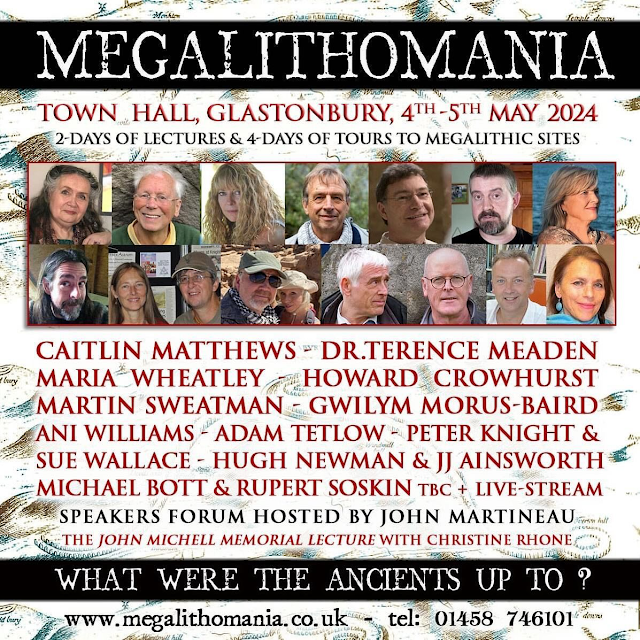
I'm presenting at this year's Megalithomania

Image
  Megalithomania Conference, 4th - 5th May 2024

Holliday et al.'s Gish Gallop: Impact scenarios

Image
Holliday et al.'s "comprehensive refutation" of the Younger Dryas impact hypothesis (YDIH) is a highly misleading  Gish gallop. An earlier blog post addressed the presence of impact melts and microspherules in the YDB (Younger Dryas boundary). By themselves, they confirm a cosmic impact at Abu Hureyra near the YD onset. Due to the similarity of debris at the YDB across a wide range of sites, it's likely there were cosmic impacts across a wide area within a short timespan. Other blog posts examined the presence of nanodiamonds and platinum in the YDB. As they occur in the debris layer with microspherules at Abu Hureyra, they are also good impact indicators. They are present in many other YDB layers, along with apparent impact spherules, signalling a widely distributed cosmic impact. The previous blog post showed this layer of impact debris distributed across four continents within a narrow timeframe suggests a single event or highly correlated series of events wit...