Posts

Stonehenge: Solar calendar or not?

Image
  Figure 8A from T. Darvill (2022), "Keeping time at Stonehenge", Antiquity 96, 319-335. Last year, Timothy Darvill's paper made the headlines: Stonehenge could have been used as a solar calendar. It seemed to make a lot of sense. After all, solsticial alignments and calendars go together, like cheese and biscuits, and Stonehenge is famous for its solsticial alignments. Indeed, Darvill suggested the calendar was kept in time by observing the summer sunrise or winter solstice (or both). This is the way it was supposed to work; If we consider only the large megaliths of the 'Stage 2' construction, circa 2620-2480 BCE, then... 1. There are apparently 30 upright stone megaliths in the outer Sarsen ring. Although many are missing now. there is archaeological evidence for all of them. These can obviously be used to count the days of each 30-day month. 2. Do this 12 times and you get 360 days. 3. The final 5 'epagomenal' days can be counted with the trilithon hor...

Interview with Sammy on YouTube, on the Younger Dryas impact and Gobekli Tepe

Image
  Had a good chat with Sammy. Thanks Sammy!

Interview with Jordan Youkilis on his "Entangled" podcast

Image
 Available on  spotify . Enjoy.

James Powell's response to Mark Boslough regarding the destruction of Tall el-Hammam

Image
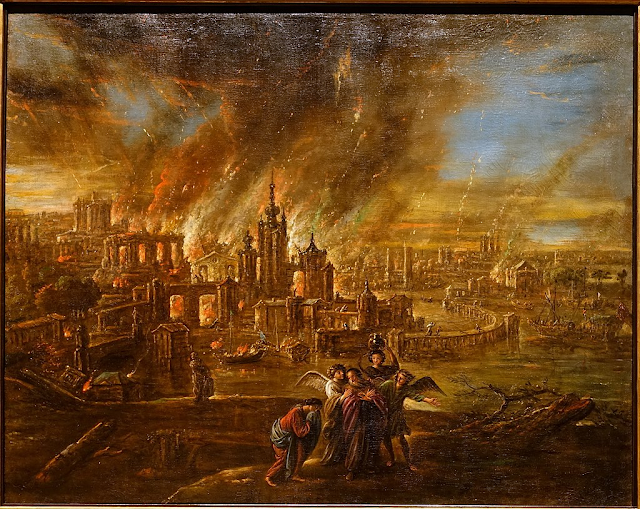
Sodom and Gomorrah afire, by Jacob de Wet 11, from Wikipedia James Powell , an eminent geologist, now retired, has just published an excoriating review of Mark Boslough's  criticism of the recent  Tall el-Hammam paper , one of the most widely read scientific papers of the last decade. This paper argues that a cosmic impact destroyed Tall el-Hammam circa 1650 BCE. This event might have been remembered in Biblical terms as the destruction of Sodom. Rather than critiquing this paper in the usual way through publishing a peer-reviewed rebuttal, Mark instead published his ad-hominem-laden review in the Skeptical Enquirer, a magazine published by the Committee for Skeptical Enquiry (CSI) (oddly, it has the tagline "The Magazine for Science and Reason"). Much of his article was a targeted attack against a member of the Comet Research Group, Allen West. You can see much the same kind of attack on Allen on the talk page of Wikipedia's article on the Younger Dryas Impact Hypo...

Wikipedia's bias - a case study: The Younger Dryas impact hypothesis

Image
Wikipedia is notoriously biased on some subjects. You can find plenty of information about Wikipedia's biases through Google. Also see this video by one of Wikipedia's founders,  Larry Sanger . Plenty of other videos like this can be found . The Younger Dryas impact hypothesis Wiki page, along with several related pages, provide clear examples of this bias. One reason this bias occurs is because Wikipedia is not scientific. Wikipedia is written by its editors. These editors decide which sources should be promoted and which should be neglected according to their judgement about how reliable each source is - they discuss these issues on the associated 'talk' pages. However, these editors are frequently not scientists or academics themselves and can be strongly biased. This means they often use unreliable sources, here-say, or simply their own opinion in reaching these decisions. This is not how science works. Scientists, like most academics, are trained to evaluate the q...

Whence Phaethon?

Image
                                  Phaethon, by Gustav Moreau Where and how did the well-known Phaethon myth originate? This paper ... The Fall of Phaethon in Context: A New Synthesis of Mythological, Archaeological and Geological Evidence in: Journal of Ancient Near Eastern Religions Volume 16 Issue 1 (2016) (brill.com) argues that the myth known by the early classical Greek playwrights and philosophers undoubtedly originated with a cosmic impact. The parallels are very clear. In my book, I also argue this, since the description by Plato in his Timaeus is such an accurate description of the drawn-out process of near-Earth comet disintegration. There have been, and  will be again, many destructions of mankind arising out of many causes;  the greatest have been brought about by the agencies of fire and water,  and other lesser ones by innumerable other cau...

Gobekli Tepe to Ancient Egypt?

Image
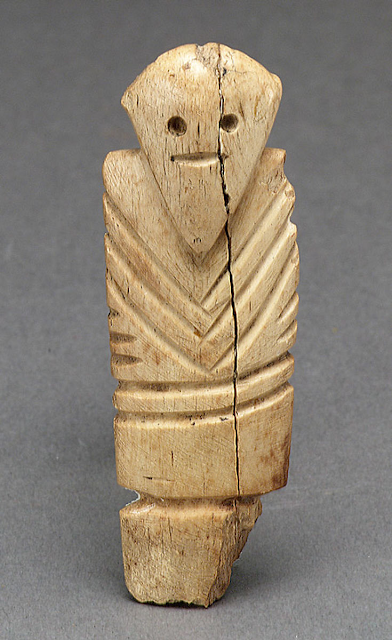
  Predynastic Egyptian carving (from metmuseum.org) There are now plenty of clear symbolic similarities between Gobekli Tepe and later 'intercultural' symbols found across Egypt, Mesopotamia, Iran and the Indus Valley. Apart from all the zodiac-like animal symbols, which seem to have informed some of the earliest deities in Ancient Egypt, we have the above figure (in the Met Museum), probably a time-controlling or creation deity, with a double-V neck symbol. We see a similar figure at Sayburc, which is also probably the same deity as Urfa Man (in Sanliurfa museum), Both the Sayburc figure and Urfa Man are thought to be contemporaneous with Gobekli Tepe. Note how Urfa Man and the Sayburc figure hold their genitals. We also know that the Ancient Egyptian creator deity Atum, one of the earliest deities known, possibly pre-dynastic, is said to have created the world through masturbation and is associated specifically with the setting sun. So, does the little Ancient Egyptian statue...